Chinese Look-Alike Characters: One Small Stroke, A New Word
At first glance, Chinese characters can look like a field of tiny details. That is exactly why look-alike characters are worth learning early: spotting one extra stroke, dot, or change of direction can help you avoid confusing two completely different words.
The good news is that you do not need to memorise every character as a separate drawing. Train your eye to compare the key detail, then attach the completed character to its pronunciation and meaning. The pairs below are a practical place to start.
Use a three-step visual check: look at the top, look for dots, then trace the final stroke. Similar shapes are not interchangeable—one small change can give you a different sound and a different word.
Why these pairs catch beginners out
English readers are used to letters staying fairly stable. In Chinese, a tiny adjustment can be meaningful. 大 and 天 share most of their strokes, but adding one short line above changes “big” into “sky.” 木 becomes 米 when two small dots are added, turning “tree” into “rice.”
The goal is not to stare at every line anxiously. It is to build a small set of visual cues: a top line, an extra dot, a longer tail, or a different inner stroke. Once you notice the cue, say the word aloud and give it a real-life meaning.
Ten look-alike pairs to train your eye
Keep these graphics as a visual reference. Each image shows the contrast at a glance; the notes underneath tell you exactly where to look.
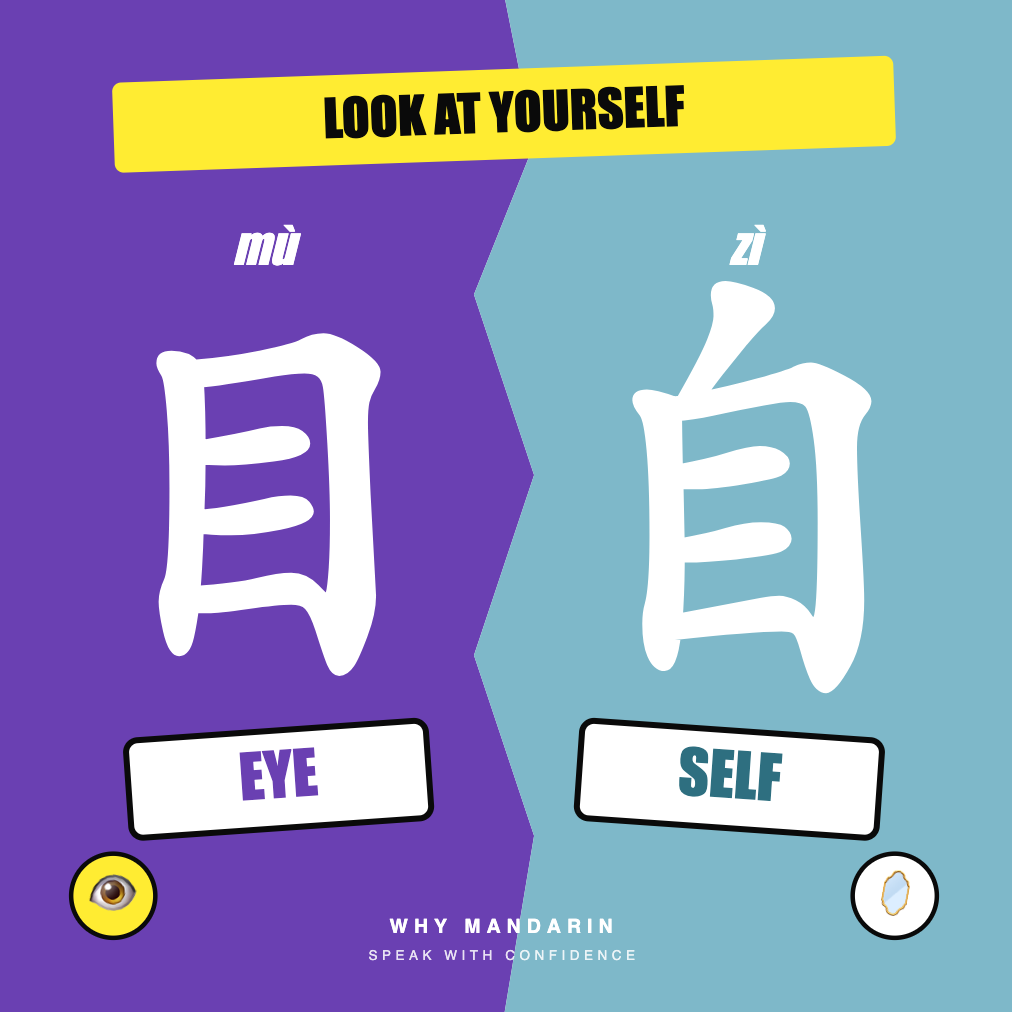
目 and 自
目 (mù · muk6) means eye in a formal written sense; in everyday speech, eye is more often 眼 (yǎn · ngaan5). Add the small top stroke and you have 自 (zì · zi6), meaning self.
Spot it: Check the very top first: that short extra stroke changes the character.
日 and 白
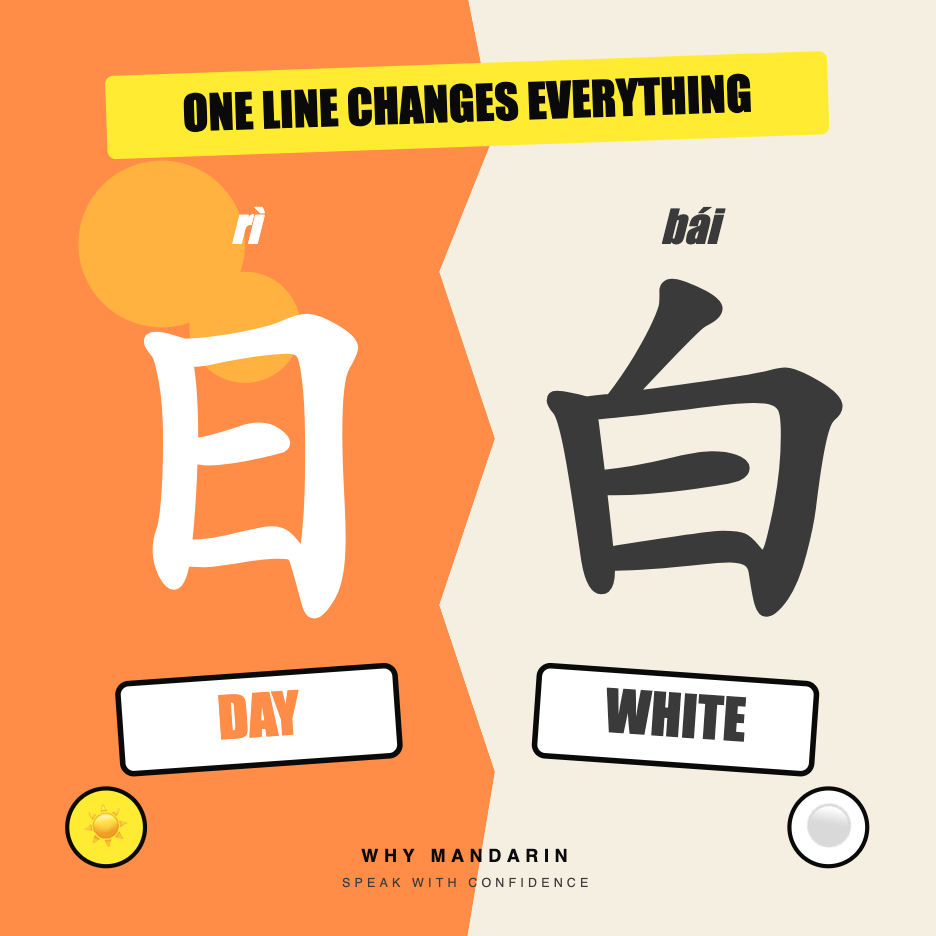
日 (rì · jat6) means day or sun. 白 (bái · baak6) means white.
Spot it: One line above the box turns day into white.
十 and 七
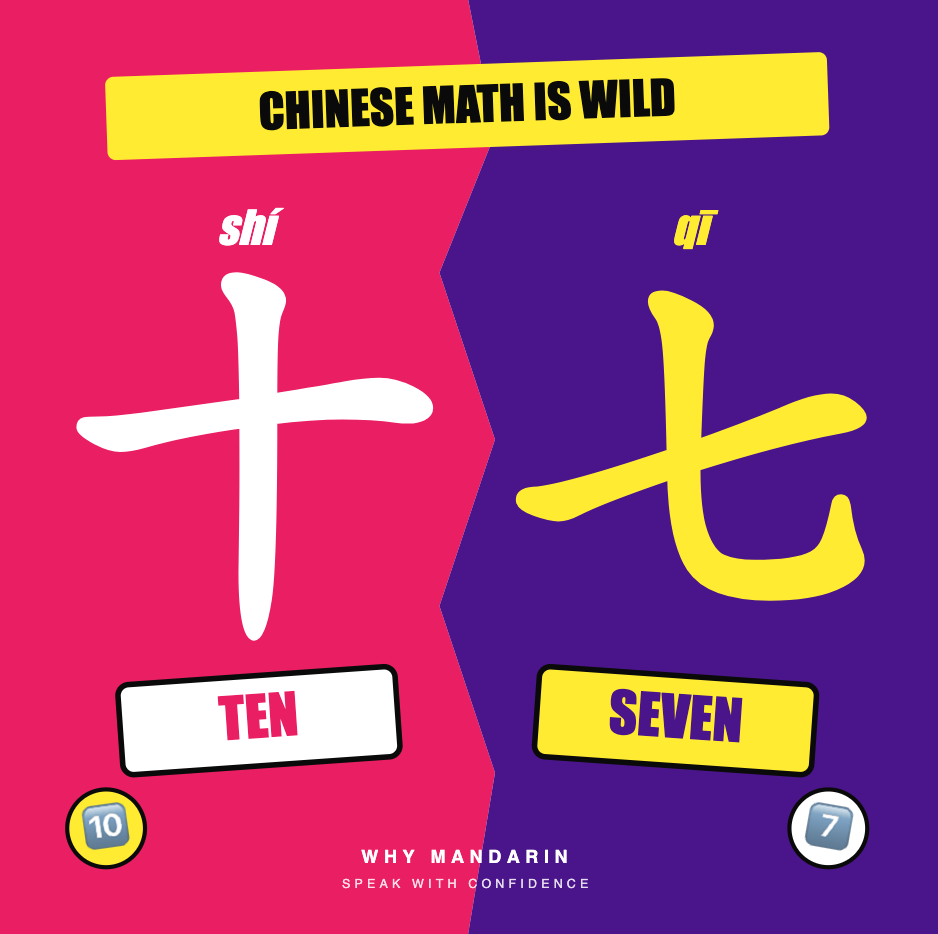
十 (shí · sap6) is ten. 七 (qī · cat1) is seven.
Spot it: Extending the tail and adding a hook to the end changes the number by 3.
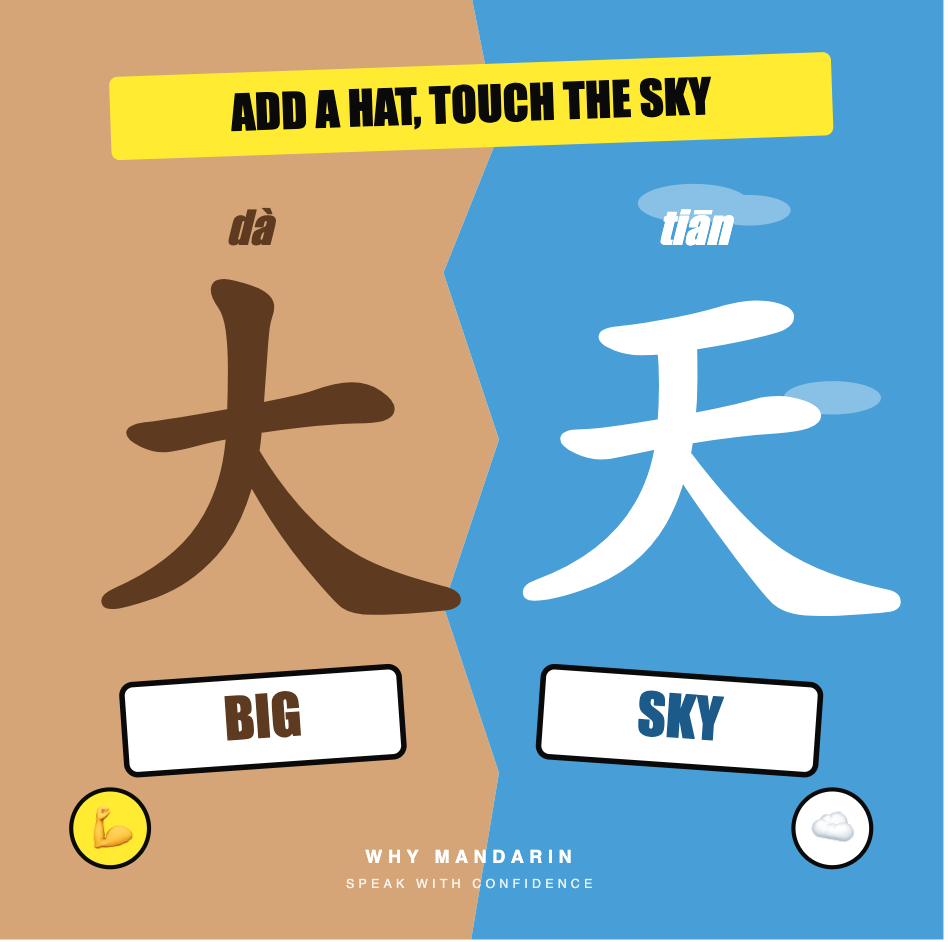
大 and 天
大 (dà · daai6) means big. 天 (tiān · tin1) means sky or day.
Spot it: A single horizontal line above 大 creates 天.
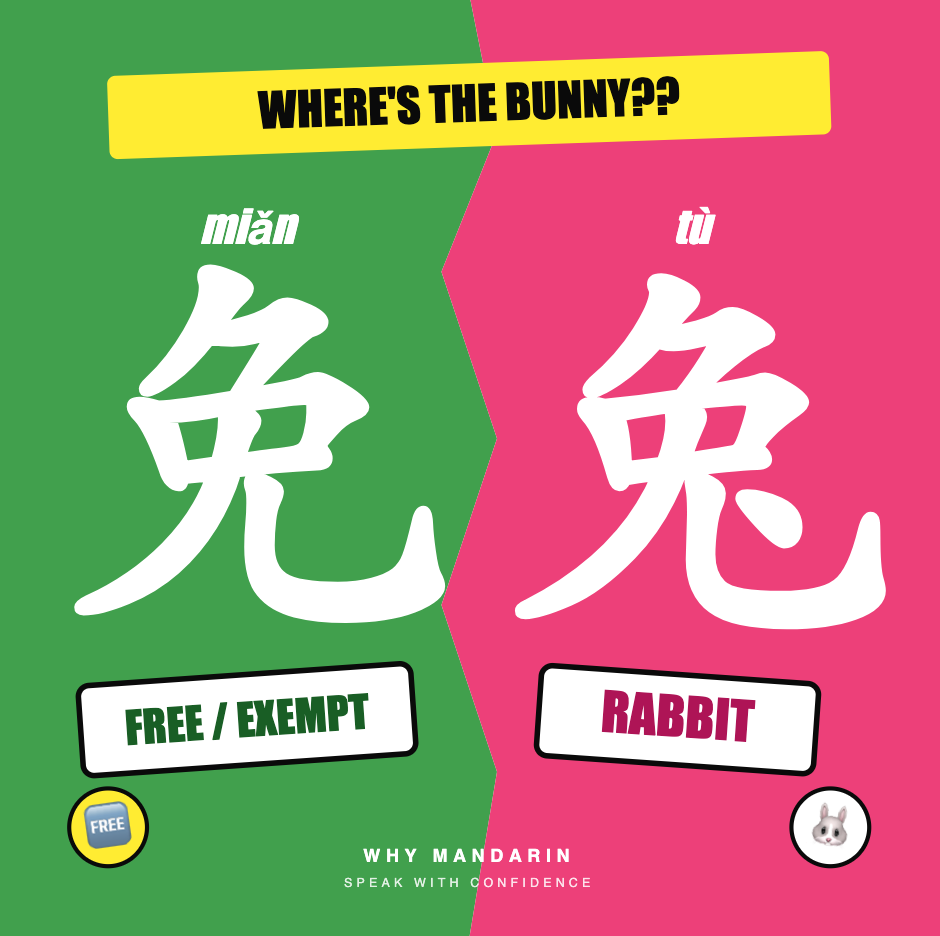
兔 and 免
兔 (tù · tou3) means rabbit. 免 (miǎn · min5) means free from or exempt.
Spot it: Look for the small dot at the lower right: it helps you spot rabbit.
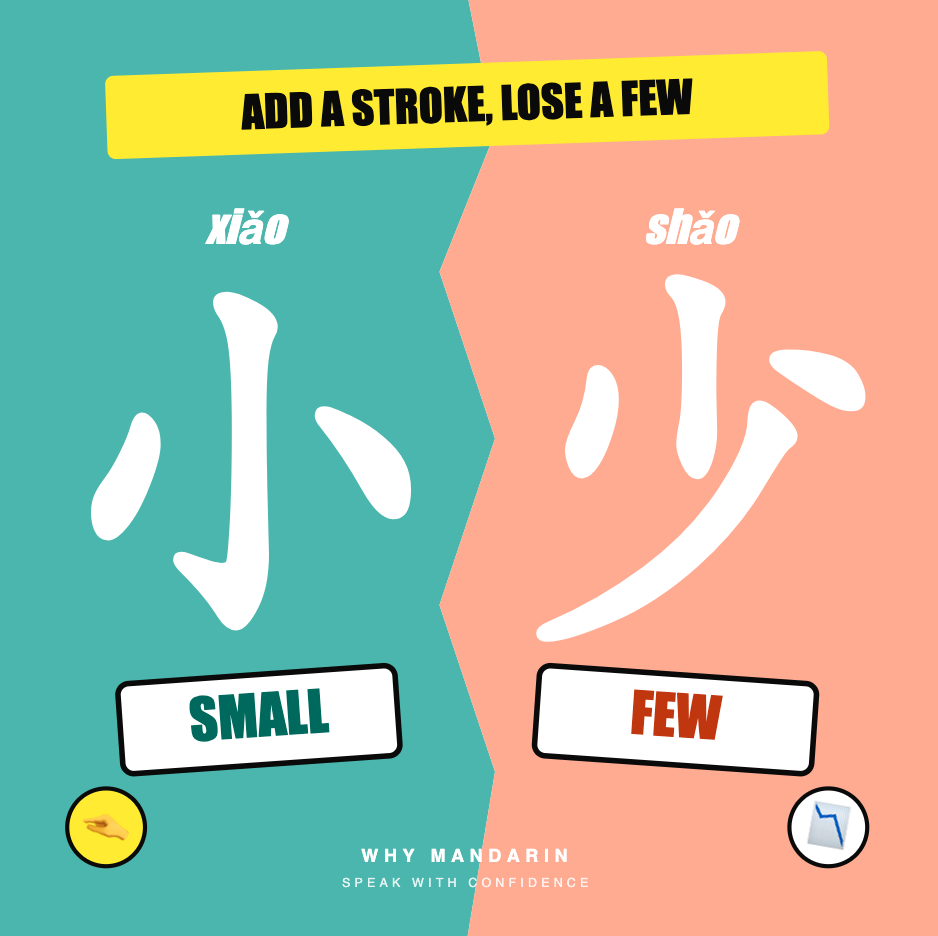
小 and 少
小 (xiǎo · siu2) means small. 少 (shǎo · siu2) means few or little.
Spot it: The added stroke is small, but the word and pronunciation change.
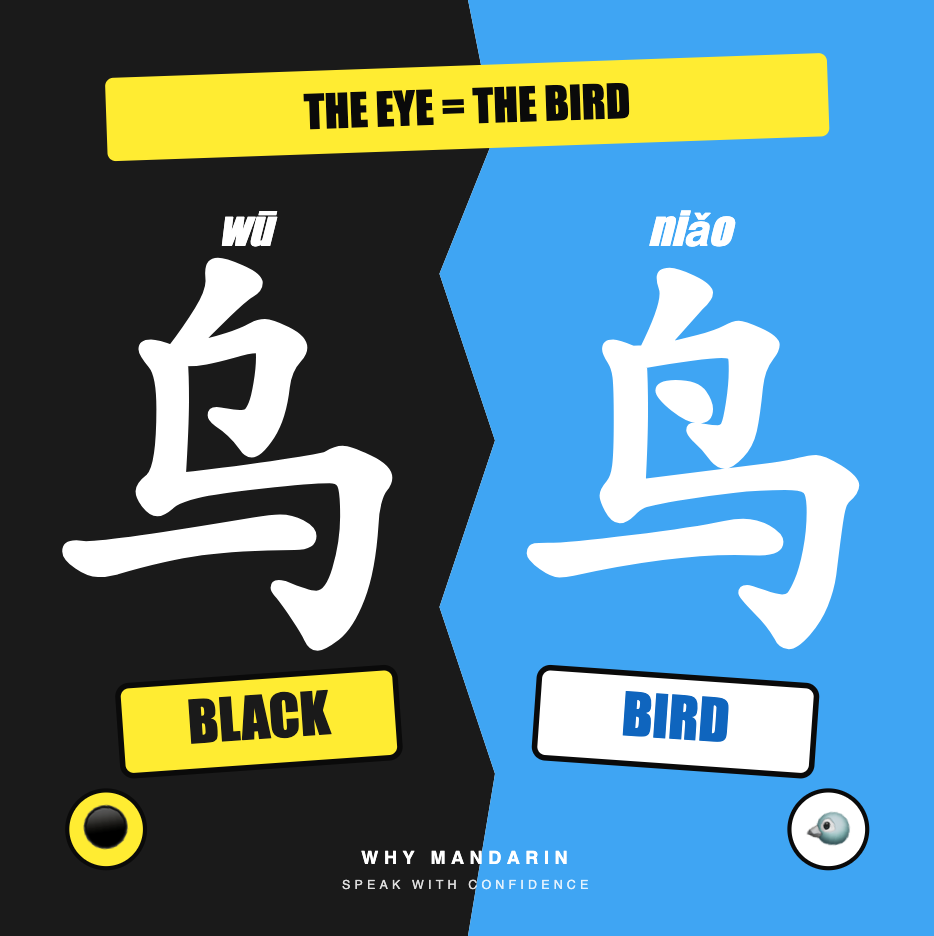
乌 and 鸟
乌 (wū · wu1) means black. 鸟 (niǎo · niu5) means bird.
Spot it: A tiny mark helps distinguish the bird from black.
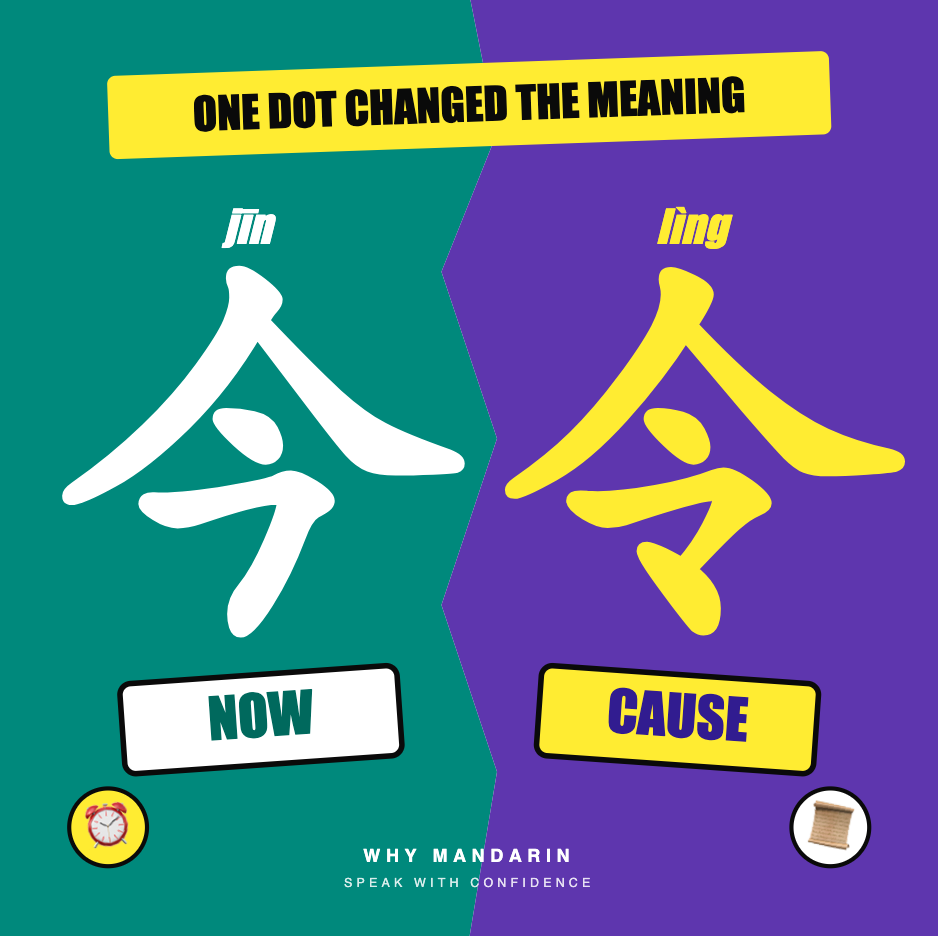
今 and 令
今 (jīn · gam1) means now. 令 (lìng · ling6) can mean command, order, or cause.
Spot it: Compare the lower interior strokes rather than only the outline.
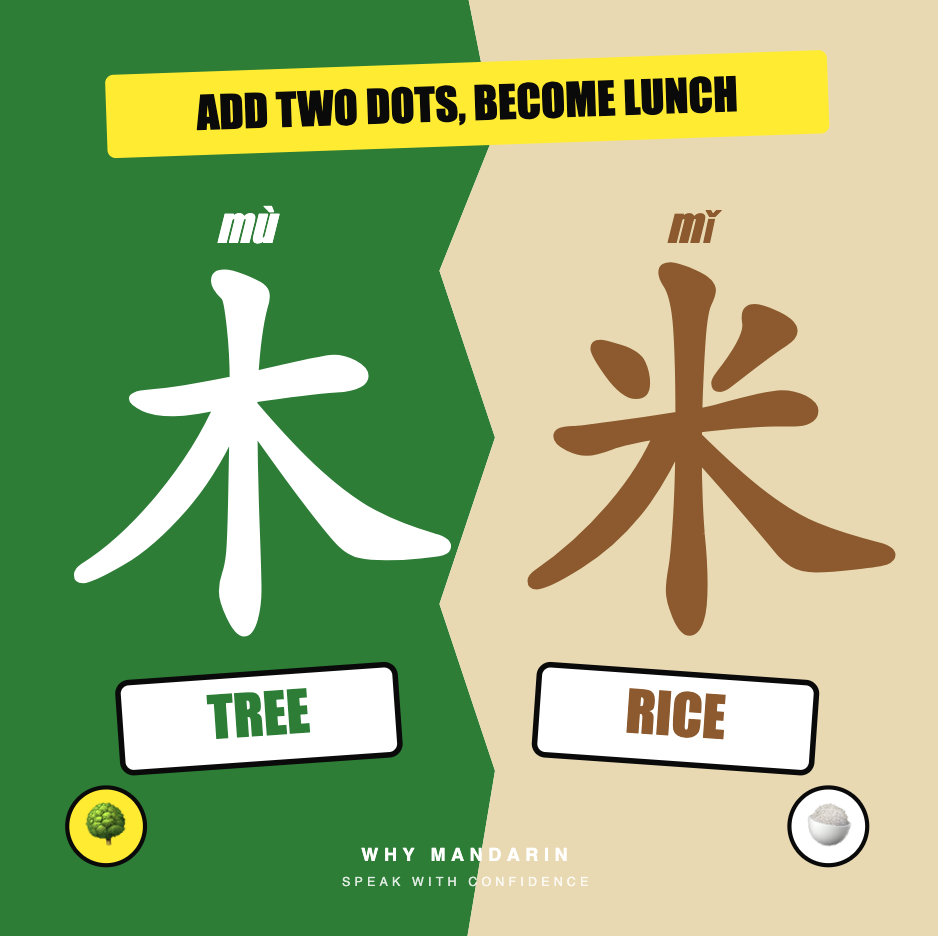
木 and 米
木 (mù · muk6) means tree or wood. 米 (mǐ · mai5) means rice.
Spot it: The two small dots are the giveaway: tree becomes rice.
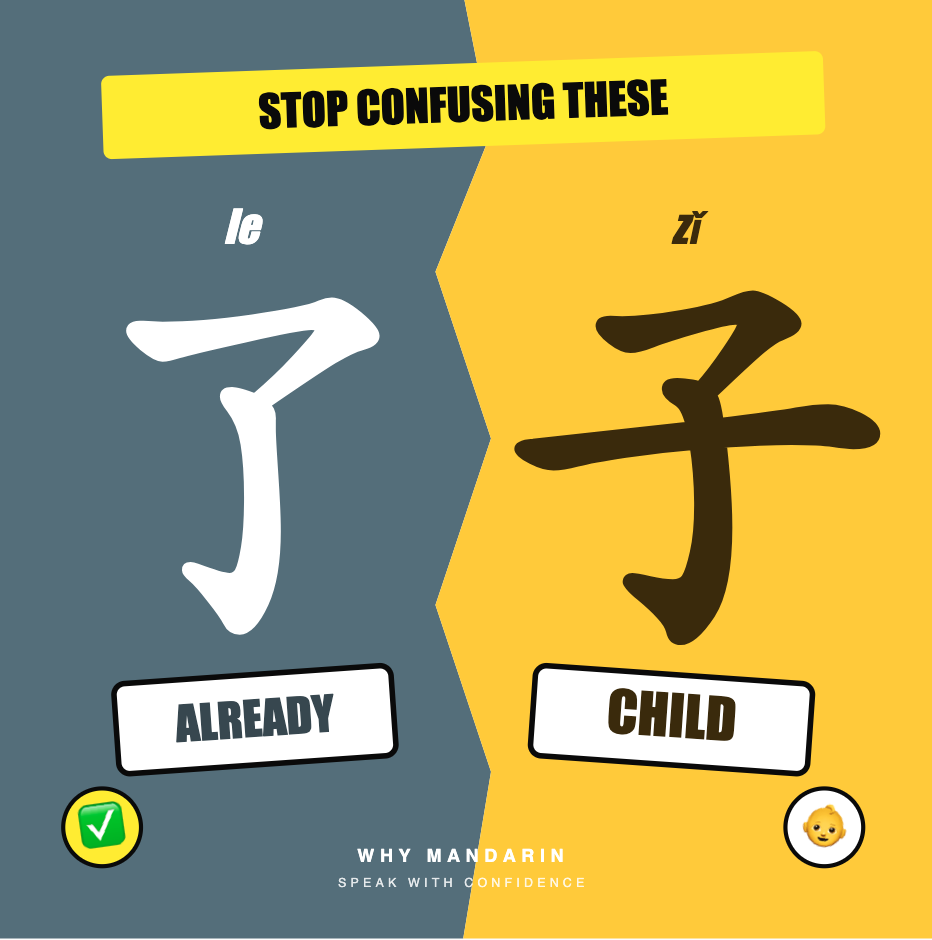
了 and 子
了 (le · liu5) commonly marks a completed action or a new situation in Mandarin. 子 (zǐ · zi2) means child.
Spot it: Add a long horizontal crossbar for that big belly bump.
Turn confusion into a useful habit
When you meet a new character, do not only ask “What does it mean?” Ask “What is the one detail that stops it being the character I already know?” That comparison builds sharper reading habits and gives your memory a clear hook.
These examples expand on Why Mandarin’s Look-Alike Characters post. Revisit the pairs until you can name the visual difference before you check the answer.